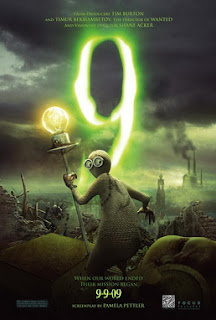
The first short film to analyze, is 9 by Shane Acker. The film is about a rag doll who lives in a miniature junkyard. In the beginning of the film, the main character is working with a friend to get a lightbulb to work. While doing this, a monster is shown to be working in the shadows. The main characters friend notices and tells the main character to run as they stay behind to fight off the beast. The main character turns around to watch their friend, get easily overpowered and killed by the monster. This monster then turns its attention to the main character, chasing it until the main character can get out of sight for a few seconds. At this point, the main character devise is a trap to jump on top of the monster, which does not work out. By the end of the film, the main character is backed up on a ledge, while the monster creeps towards it. In this moment, the main character jumps, causing the balance of the plank to shift, sending the monster into a long fall. At the end, the...
After looking over each genre, we decided that, in order for our pitch to be correctly formatted, that the thriller genre would fit. We came to this reason because the thriller genre is almost exactly how we want the opening sequence for our pitch to be like, scenes full of suspense and avid movements. The reason why horror genre wouldn’t work for our pitch was due to the plot having no horror sense at all. The plot of our pitch is greatly action-related and a horror genre wouldn't fit to all the scenes having more movement. Our opening sequence is based on a rivalry, not some upper entity who controls all of the environment around the protagonist, which is why horror genre would also not be a good fit. The action genre was another candidate but had felt as if it were the same type of energy as a horror film rather than an thriller. Throughout each and every action film I had researched on, there were lots of action and movement throughout scenes, however, most were spook-related...
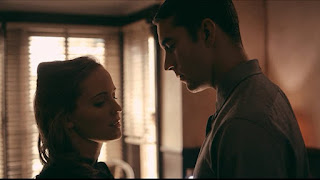
The film is called ”The Trail’s End”. The film starts off with a close-up of a man’s face with an artificial glow in his eyes. The man stands up and it is revealed that he is at least part robot because his hands are made of metal and he unplugged his body from a charger. The man walks to his door and opens it to find a messenger robot, delivering him mail. On his way to the door, the diegetic sound can be heard of a woman screaming. After he gets his mail, he looks over and see is a woman who gives him a seductive look. He looks back down at his mail to see that he is scheduled for termination. The next day, the woman shows up at his front door, asks for sugar, and even though he doesn’t have any, lets herself in. At the end of their one-sided discussion, she tells him to come over later that night. When he goes over later that night, he finds a man hitting her with a belt. The man is shown in and over the shoulder shot angrily yelling at the robot man. The man attempts to fight the r...

Comments
Post a Comment